
.png)
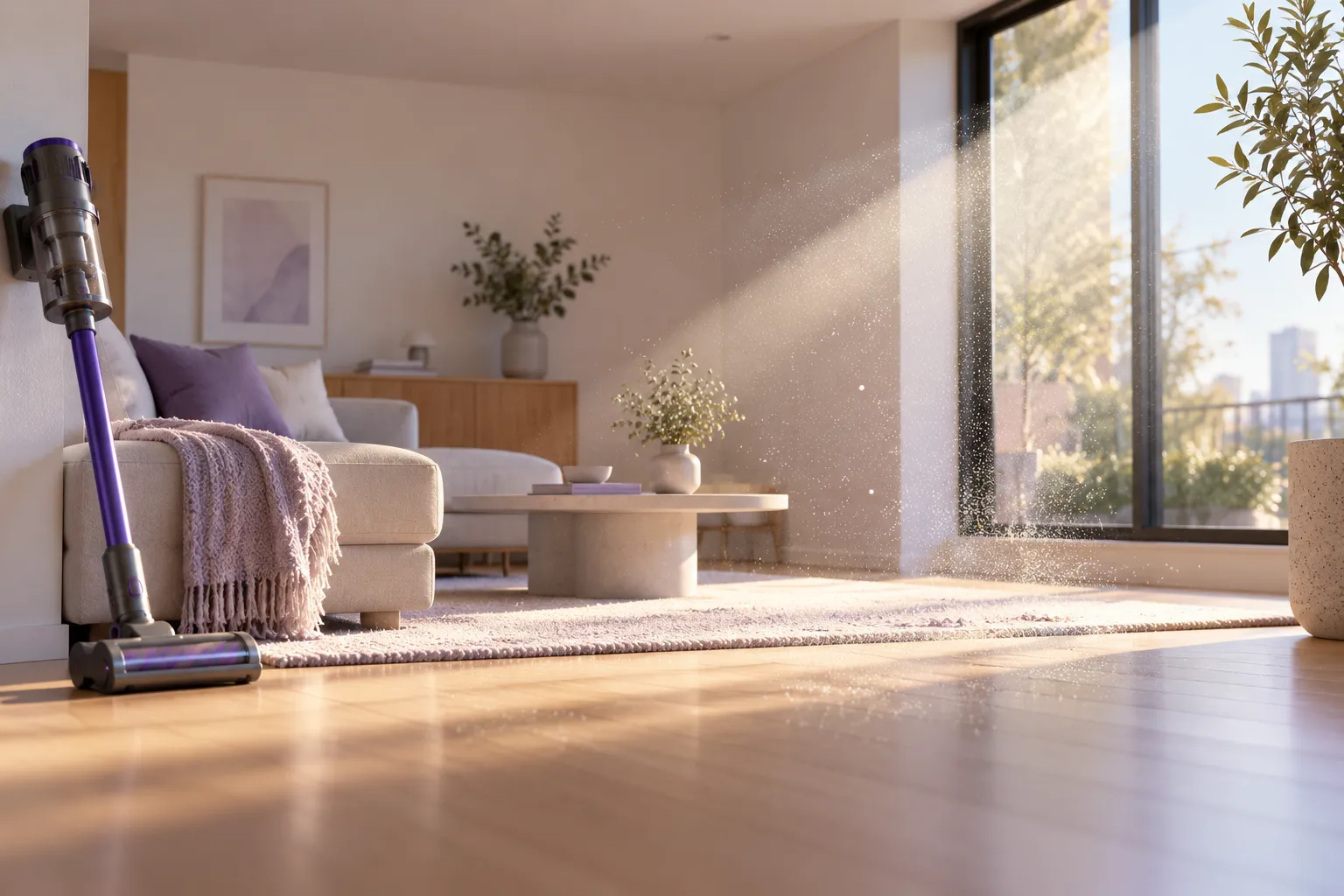
Dust comes back quickly because cleaning does not stop new particles entering the room, and it can temporarily lift settled dust into the air before that dust lands again. Outdoor air, people, pets, fabrics, cooking and everyday movement all add or move particles around a home. A freshly cleaned surface can therefore look dusty again without meaning the cleaning was pointless.
The useful goal is not a permanently dust-free home. It is to reduce build-up, clean in an order that limits re-settling, and notice when the vacuum itself is no longer collecting properly.
Where does household dust keep coming from?
Household dust is not one substance. The US Environmental Protection Agency's indoor-particle guidance describes indoor dust as settled particulate matter from several sources. It can include outdoor soil and dust carried or blown inside, pollen, mould spores, pet dander, skin flakes, hair and particles produced by activities such as cooking and cleaning.
Outdoor and indoor air also keep mixing. Particles enter through open doors and windows and through small gaps in a building. Inside, walking, moving cushions, making a bed or handling textiles can disturb material that had already settled.
Can dusting or vacuuming put dust back into the air?
Yes, temporarily. The EPA notes that walking, sweeping, dusting and vacuuming can stir settled dust into the air. Some of it may stay suspended for a while and then settle on surfaces after you have finished. That is one reason a tabletop can look clean at noon and show a fine film in afternoon light.
This does not automatically mean your vacuum is faulty. The room may still contain airborne particles, and the act of moving through it changes where settled dust sits.
What cleaning order helps reduce re-settling?
Use a simple top-to-bottom routine rather than chasing every visible speck:
- Deal with obvious sources first. Put away dusty items, shake suitable mats or textiles outdoors where appropriate, and follow their care labels.
- Wipe higher hard surfaces with a damp cloth. Damp wiping helps hold settled dust instead of sending as much of it back into the air.
- Let disturbed dust settle. If a room looks hazy in strong light after moving textiles or dry dusting, give it time before the final floor pass.
- Vacuum floors and suitable furniture last. Use the attachment intended for the surface and follow the machine and flooring instructions.
- Maintain household filters as directed. Heating, cooling and air-cleaner filters should be changed or cleaned according to their manufacturers' instructions.
The EPA recommends frequent cleaning and ventilation as practical ways to reduce indoor dust. Whether opening windows helps on a particular day depends on outdoor smoke, pollen, traffic pollution and weather, so use local conditions rather than treating open windows as a universal rule.
How do I know whether the vacuum is part of the problem?
A little dust reappearing is normal. A vacuum deserves a closer check when the machine's performance has changed. Useful observations include:
- pickup is weaker than it used to be;
- the machine pulses or stops during ordinary use;
- debris escapes from the bin or a connection;
- a cleaner head no longer turns as expected;
- there is visible damage to the bin, seals, wand or head; or
- dust appears to leave the machine while it is running.
Switch off and disconnect the machine before any user-level check. Empty the bin at its marked limit, look only for accessible blockages, and clean only parts identified as washable in the instructions for your exact model. Never refit a wet filter or dismantle an electrical assembly.
If the symptom continues, send Dusti the model, what has changed and your suburb rather than buying parts from a guess. Dusti is an independent repair business.
Can a service make a dusty home stay dust-free?
No service can stop outdoor dust, fabric fibres, hair or normal household activity. A service can assess whether the vacuum is collecting and operating as it should.
Dusti's current Dyson service is A$95. Optional Melbourne pickup and return is A$30 within the service area, making A$125 total. Parts and fault-specific repair work may cost extra. Contact Dusti before booking if you are unsure whether the service suits the symptom.
If the machine is no longer worth keeping, you can also compare Dusti's current refurbished Dyson listings. Confirm availability, condition, included accessories and delivery before paying.
Sources and service terms checked 7 October 2026. The opening artwork is an illustration, not a photograph of a customer home or Dusti repair.

